
Can your office phone system handle a busy Monday morning without sending calls into a black hole? Can staff answer business calls away from their desks without carrying two phones? If the answer is no, the old PBX may be working hard, but it is probably not working smart.

That is why Singapore businesses are switching to IP PBX phone systems.

A conventional PBX depends heavily on dedicated telephone lines and specialized on-site equipment. It can be dependable, but changes may involve cabling work, service appointments, and added cost. Adding a new employee should not feel like a renovation project.

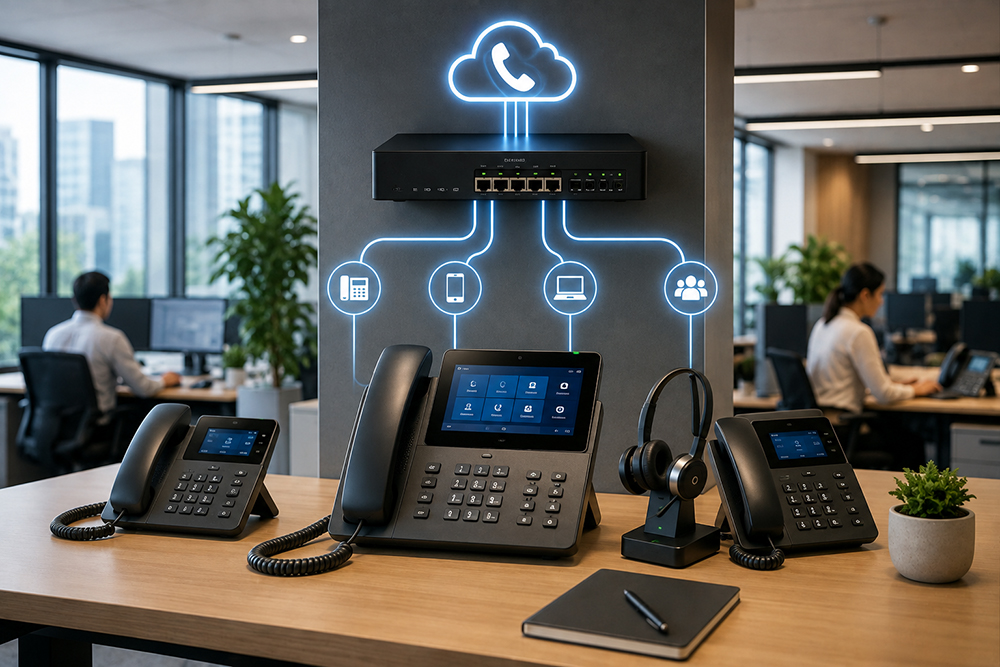
An IP PBX uses an organization’s data network and internet connectivity to deliver voice services. Calls can still be handled through desk phones, but users may also access approved extensions through computer applications or mobile devices. This gives businesses more options in how calls are routed, answered, and monitored.
#1 Flexible Growth Without Rebuilding the Phone System

With the right IP PBX design, administrators can add extensions, create call groups, adjust business hours, and update call routing through a central management interface. That does not mean every change is automatic or risk-free. Network capacity, licensing, handset compatibility, and security settings still need to be assessed. But the process is generally more adaptable than modifying legacy phone wiring for every request.

This flexibility matters for businesses that need to:

#2 Better Support for Hybrid and Mobile Teams

IP PBX platforms can support ring groups, call forwarding, mobile softphone applications, voicemail-to-email, and presence information. A receptionist can see whether a colleague is available. A sales representative can return a client call using a business identity rather than a personal number. A support team can receive calls according to skills, schedules, or escalation rules.
These features are useful, but they need sensible governance. Not every employee needs mobile access to every line, and external access should be protected with strong authentication and clear device policies. Businesses handling sensitive conversations should also consider call recording rules, access rights, and retention requirements before enabling features broadly.

#3 A More Professional Customer Call Experience

Customers rarely care what phone platform a company uses. They do notice when calls go unanswered, transfers fail, or they are repeatedly asked to call another number.
An IP PBX gives organizations more ways to design a consistent caller experience. Auto-attendants can direct callers to the right department. Queue announcements can set expectations during peak periods. Hunt groups can distribute incoming calls among available employees. Supervisors can review call activity and identify patterns that affect service performance.
For a growing business, this can create the impression of a well-organized operation without requiring a large contact center. For larger enterprises, it offers a foundation for more advanced unified communications and customer service workflows.

#4 Lower Complexity Through Centralized Administration
Many organizations have accumulated communication tools over time. There may be a legacy PBX in the office, personal mobile numbers used for customer calls, separate conferencing software, and an old analog line kept alive because nobody is quite sure what it supports.
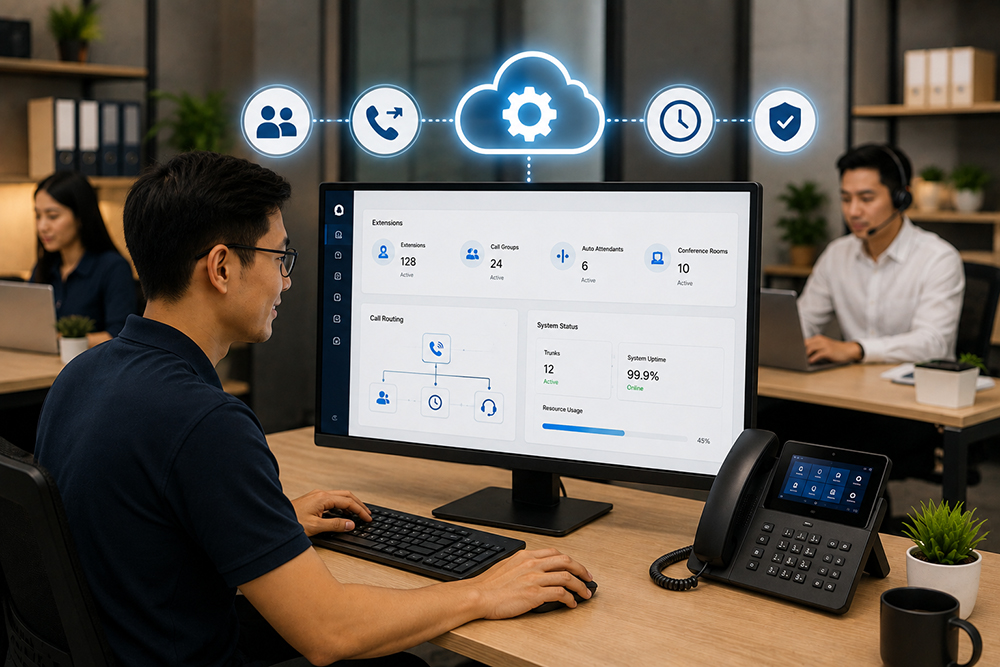
An IP PBX can reduce this fragmentation by centralizing core telephony functions. Authorized administrators gain a clearer view of extensions, call routes, devices, and system activity. This makes everyday tasks easier, from onboarding a new employee to changing an after-hours greeting.

#5 Cost Control Is About Visibility, Not Just Cheaper Calls

Cost is a major reason businesses evaluate IP telephony, but the strongest case is rarely just the price per minute. The bigger opportunity is to reduce hidden operating costs: repeated technician visits, expensive line changes, missed calls, duplicate tools, and time spent managing disconnected systems.
IP PBX systems can make usage and configuration easier to monitor. Depending on the deployment, companies may also reduce reliance on traditional phone lines and align spending more closely with actual user needs.

#6 Network Quality and Security Still Matter
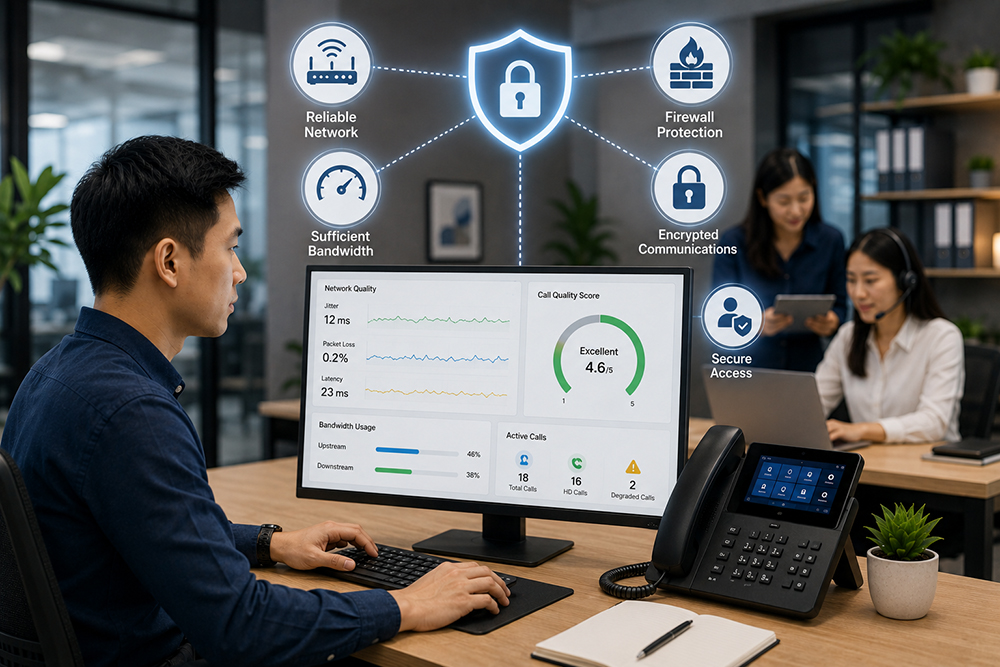
Voice calls are sensitive to network conditions. Even a feature-rich IP PBX will frustrate users if the network suffers from congestion, poor Wi-Fi coverage, high latency, or unstable internet service. Clear calls begin with sound infrastructure.
Before deployment, an experienced provider should review network readiness. This may include bandwidth planning, network segmentation, quality-of-service settings, switch capacity, Wi-Fi performance, power backup, and connectivity resilience. For critical operations, a secondary connection or failover strategy may be appropriate.
Security also deserves attention. IP phone systems are connected systems, which means they need disciplined administration. Strong passwords, controlled access, software updates, secure remote connectivity, fraud prevention measures, and regular configuration reviews should be part of the plan.