
Can your phone system support a customer call when the office is quiet, the team is working remotely, and the IT manager is on leave? Or does it need a pep talk and a restart first? When evaluating cloud PBX vs on premise telephony, the right answer is rarely about choosing the newest technology. It is about choosing a communications model that fits your people, infrastructure, security requirements, and plans for growth.
For Singapore businesses, voice communication remains central to customer service, sales coordination, operations, and supplier management. A reliable PBX system should make calls easier to manage, not create another infrastructure project for the business to worry about.
Cloud PBX vs On Premise: The Core Difference
A PBX, or private branch exchange, connects and routes calls inside an organization and to external numbers. It also provides business features such as extensions, call forwarding, voicemail, auto attendants, call queues, and reporting.
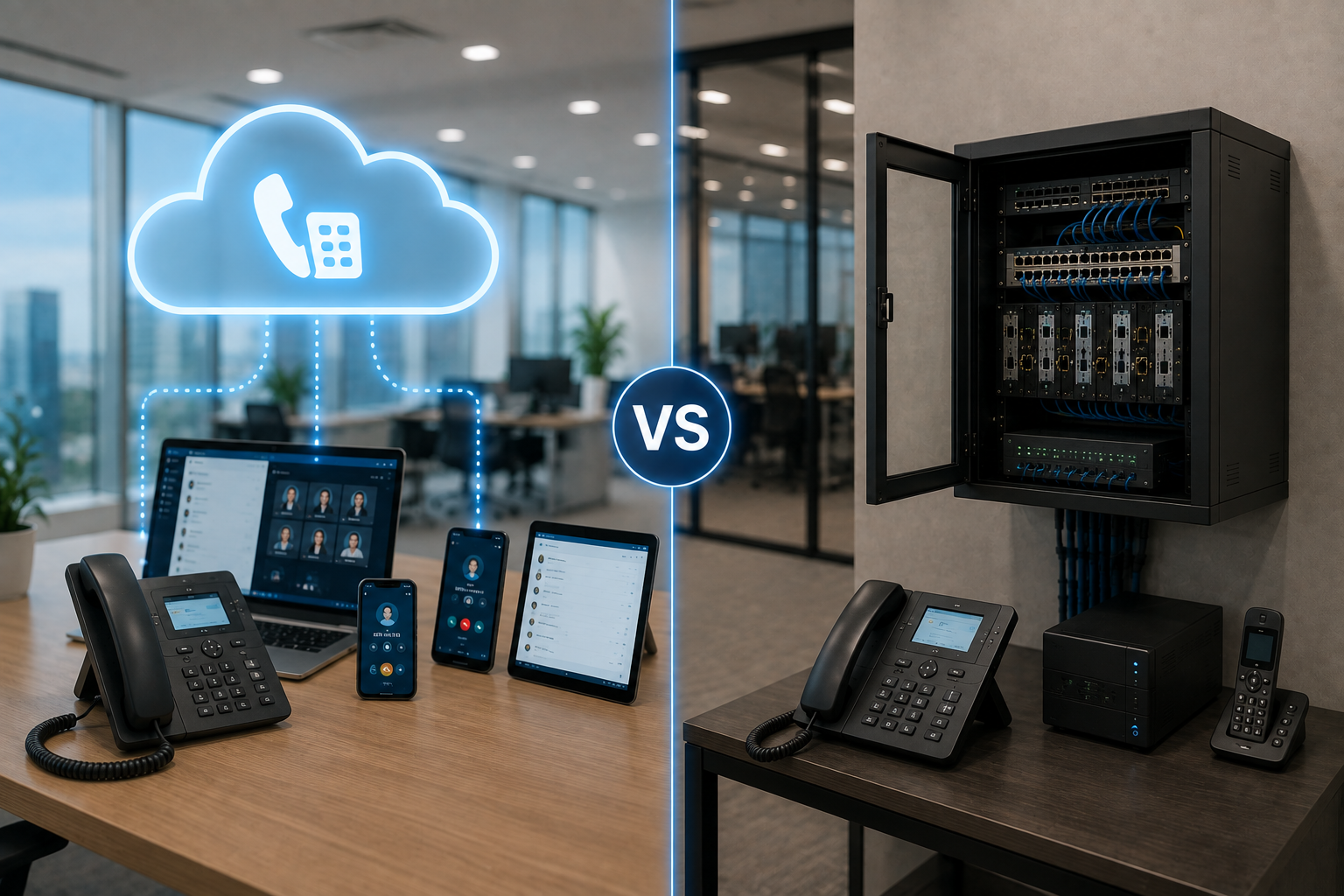
With an on-premise PBX, the core phone system is installed at your office, data center, or another business-controlled location. Your organization owns the equipment and is responsible for maintaining the platform, either internally or with support from a technology partner.
With a cloud PBX, the phone system is hosted in a service provider’s cloud environment. Users access calling features through IP desk phones, softphone applications, or mobile devices over an internet connection. The provider manages much of the underlying platform infrastructure.
Neither option is automatically better. The decision comes down to where your business needs control, where it prefers flexibility, and how much internal IT capacity is available.

Where Cloud PBX Makes Sense
Cloud PBX is often a practical choice for organizations that want to reduce on-site equipment, support mobile employees, or make changes quickly. Instead of purchasing a large communications server upfront, the business typically pays a recurring subscription based on users, calling plans, and selected features.
Faster changes for growing or distributed teams
Adding a new extension to a cloud PBX generally does not require installing additional server hardware. This is useful for companies hiring regularly, opening temporary project offices, or supporting hybrid work arrangements.
A cloud-based platform can help employees use their business number from multiple locations. For example, a sales representative can receive calls through a desk phone in the office, a desktop app at home, or a mobile application while visiting a customer. The caller experiences a consistent business identity rather than receiving calls from a personal mobile number.
Cloud PBX can be especially suitable when a business needs:
- Remote and hybrid calling capabilities for employees working beyond one office
- Faster onboarding for new users, departments, or branch locations
- Lower initial capital expenditure for telephony infrastructure
- Centralized management through a web-based administration portal
- Access to newer unified communications features without replacing a local server
This approach does rely on dependable internet connectivity. Voice quality is directly affected by bandwidth, latency, network congestion, and Wi-Fi performance. A cloud PBX should therefore be planned alongside the network, not treated as a separate purchase. Business-grade internet services, properly configured switches, quality of service settings, and reliable Wi-Fi all contribute to a better calling experience.
Predictable operations, with recurring costs
The subscription model can make budgeting easier, particularly for small and mid-sized organizations. Maintenance of the hosted PBX platform, software updates, and feature availability are commonly included within the service arrangement.
However, decision-makers should look beyond the monthly per-user figure. Over several years, subscription costs may exceed the ownership cost of an on-premise system for a stable organization with a fixed number of users. It is worth comparing the total cost across the expected lifecycle, including handsets, licenses, connectivity, implementation, support, and planned expansion.
When an On-Premise PBX Is the Better Fit
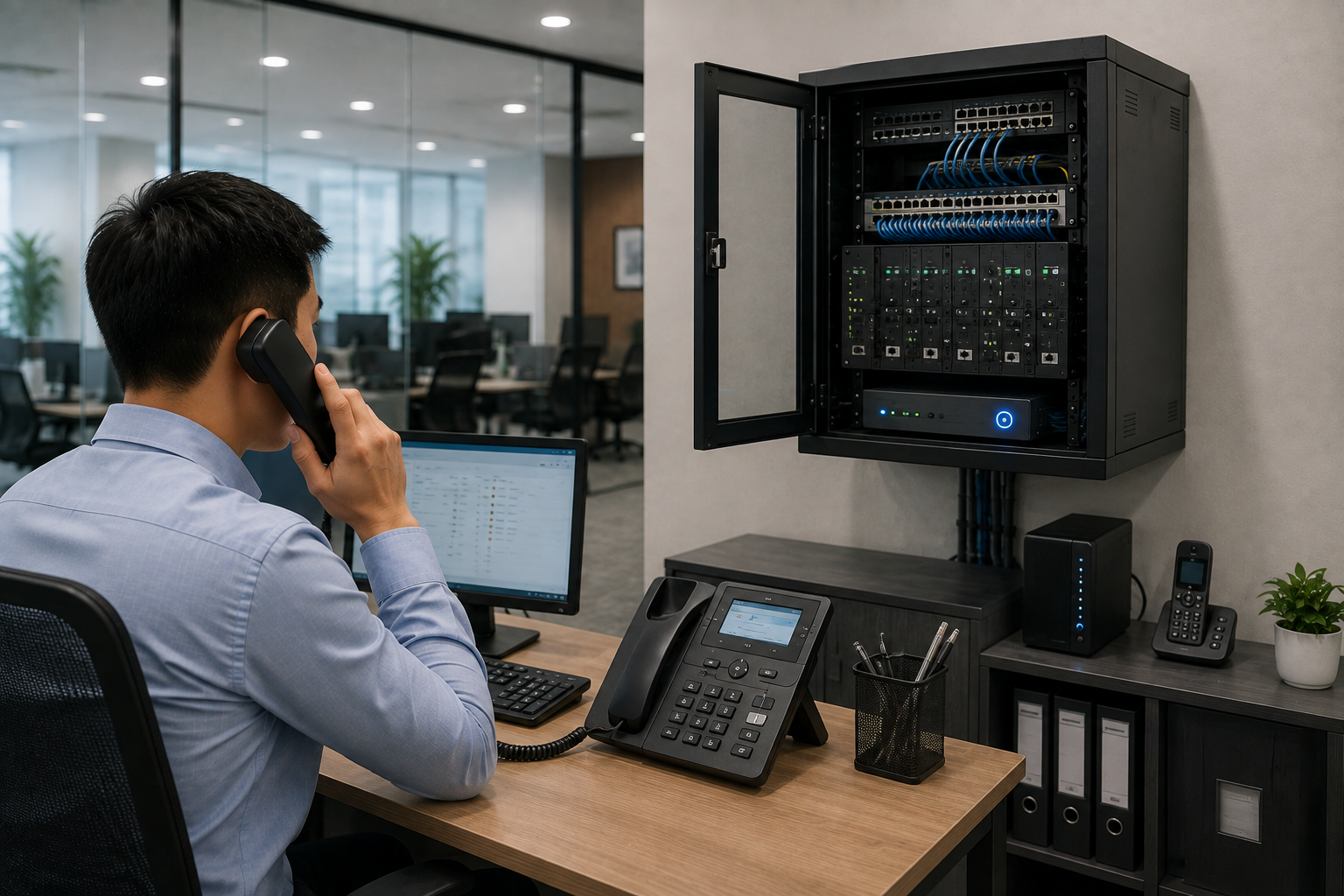
An on-premise PBX remains a strong option for organizations that need direct control of their communications environment, have established IT infrastructure, or operate in locations where local calling must continue despite internet service disruption.
Control, customization, and local resilience
Because the PBX equipment is located within the business environment, IT teams can have closer control over configuration, integration, access policies, and system data. This may be valuable for larger enterprises, businesses with specialized call flows, or organizations that need to integrate telephony with existing applications and operational processes.
An on-premise solution can also support local calling between extensions even when an external internet connection is unavailable, depending on the design and local network availability. For facilities such as warehouses, manufacturing sites, healthcare environments, and multi-floor offices, internal communications continuity can be a meaningful requirement.
On-premise PBX may be appropriate if your organization has:
- A stable user count and a long-term office or facility footprint
- Existing server, network, and power infrastructure
- Internal IT resources or a managed support partner for ongoing administration
- Detailed integration or customization requirements
- Policies that favor local ownership and control of communications systems
The primary consideration is responsibility. Hardware eventually needs replacement, software needs patching, configurations need backup, and system health needs monitoring. A lower recurring service fee does not mean the system is maintenance-free. Businesses should account for support coverage, spare equipment, power protection, cybersecurity controls, and a recovery plan.
Higher upfront investment, longer ownership horizon
On-premise PBX usually requires more initial investment because the business purchases the server or appliance, user licenses, IP phones, installation, and associated network components. For an organization with a predictable headcount and a long-term view, that investment can be commercially sensible.
The key is to avoid buying for a theoretical future that may never arrive. A system sized for 500 users is not a bargain for a 60-person company simply because it has room to grow. Capacity planning should be based on realistic hiring forecasts, office locations, and expected calling volumes.
A Practical Way to Make the Decision
Start with the business problem rather than a product preference. Map how calls enter the company, where employees work, which teams receive high call volumes, and what happens during disruptions. Then review whether the current network can prioritize voice traffic and support IP phones, softphone applications, video meetings, and other cloud services at the same time.
Ask the following questions during planning:
- How many users need desk phones, mobile apps, shared lines, or contact-center-style call queues?
- Are employees primarily based in one location, regularly mobile, or spread across multiple sites?
- What level of local control, customization, and data governance does the organization require?
- Can the business support PBX administration internally, or is managed support preferred?
- What is the total three-to-five-year cost of ownership, not just the initial or monthly price?
A pilot deployment can be useful when call quality or user adoption is uncertain. Test real workflows with a small group, including reception, customer service, sales, and remote staff. Confirm that callers can reach the right person quickly, transfers work cleanly, and reporting gives managers the information they need.